top of page


USEFUL INFORMATION
FURNITURE CARE
To keep your furniture looking beautiful and comfortable to use for years to come, follow the care guidance for each surface material. Here you’ll find guidelines for everyday cleaning, protection from moisture and heat, and proper use.

Essential everyday care guidlines
Caring for your furniture is simple: remove dirt and spills promptly, clean gently, and dry the surface after cleaning. Choose the appropriate care method for the material and finish specified in your order.
-
Use a clean, soft, well-wrung cloth and lukewarm water. If needed, use a mild, non-abrasive cleaner suitable for the surface.
-
Remove any cleaner residue with a water-dampened cloth, then wipe the surface dry. Do not leave cleaning product residue on food preparation surfaces.
-
Test any new cleaning product on a small, inconspicuous area first. Follow the instructions on the product label and the surface manufacturer’s care guidelines.
-
Do not use metal scourers, rough sponges, scouring powders or steam cleaners. Melamine sponges are not suitable for every surface: use them only if permitted by the surface manufacturer.
-
Do not scrub dried-on dirt or rub one spot vigorously, as this may alter the surface sheen.
Moisture and heat
-
Recommended conditions for most furniture panels: a temperature of +18–25 °C and relative humidity of 40–65%. If different conditions are specified for your material, follow those recommendations.
-
Wipe up spilled water, coffee, wine or other liquids immediately. Take particular care to dry edges, seams, worktop joints and areas around the sink.
-
Protect furniture from prolonged direct sunlight, open flames and hot objects. Do not place hot pots or pans directly on the surface — use heat-resistant trivets.
-
Use an extractor hood when cooking. Position kettles and coffee machines so that steam does not rise towards wall cabinets or enter joints.
-
Keep appliance ventilation openings clear. Use ovens and dishwashers according to their manufacturers’ instructions, and avoid prolonged exposure of adjacent furniture to hot air and steam.
-
Ensure adequate ventilation in the bathroom, wipe away water splashes and do not leave wet towels on furniture. Moisture-resistant materials are not designed for prolonged soaking.
LMDP
01
MFC
Melamine faced chipboards are used in the manufacture of cabinet carcasses, shelves, fronts, and various other furniture components. Particular attention should be paid to edges and joints.
What to clean with
-
For everyday cleaning, lukewarm water with a small amount of mild liquid soap or non-abrasive washing-up liquid is generally sufficient. Use a soft, clean microfibre cloth, thoroughly wrung out.
-
After cleaning, remove any soap residue with a separate cloth dampened with water. Dry the surface thoroughly, paying particular attention to the edges. Do not apply the cleaning solution directly to the furniture.
-
To remove fingerprints and fresh grease marks, start with soapy water. If further cleaning is required, use a degreaser suitable for laminated surfaces and check its compatibility with adjacent materials.
-
Clean textured panels in the direction of the grain. Small particles trapped in the cloth may scratch the surface, so rinse or replace the cloth as needed.
What not to use
-
Do not use abrasive cleaning powders, wool, metal scourers, the abrasive side of a sponge, or a knife to scrape off stains.
-
Drain cleaners, oven cleaners, strongly acidic descalers, bleach, and strong solvents are unsuitable for routine cleaning. Do not use acetone, petrol, or nail polish remover as general-purpose furniture cleaners.
-
Wax and furniture polish are unnecessary for laminated surfaces. Any residual film may attract dirt and leave streaks.
Stubborn stains
-
Manufacturers may specify special cleaning methods for certain stubborn stains. These methods are not suitable for all surfaces: always consult the care instructions for the specific product, edging, and finish.
-
Melamine sponges clean by mechanical abrasion and are therefore not recommended as a general-purpose daily cleaning tool for all furniture surfaces.
Melamine sponge: use with caution
-
If the surface manufacturer’s instructions permit this cleaning method, test it on a small, inconspicuous area first. Dampen the sponge, squeeze gently, and clean using light pressure.
-
Avoid rubbing the same area for prolonged periods. Stop immediately if you notice any change in sheen or colour. Remove any sponge residue with a damp cloth, then dry the surface.
-
Exercise particular caution on dark, matt, high-gloss, painted, and lacquered surfaces.
-
Do not use on silicone joints, damaged edges, or exposed particleboard. If in doubt, use a soft cloth and soapy water.
Start with the gentlest cleaning method. If it proves ineffective, select the next method according to the specific surface, rather than the type of stain alone.
How to remove common stains and marks
-
Dust: Use a soft, clean cloth, slightly dampened if necessary. Remove any sand or hard crumbs before wiping.
-
Coffee, tea, juice, and wine: Blot up spills immediately, clean with soapy water, remove any soap residue, and dry thoroughly. Avoid wetting joints.
-
Grease and fingerprints: Use lukewarm soapy water. If necessary, use a degreaser approved for the specific finish. Protect sealants and edges.
-
Cleaning streaks: Remove any residue from previous cleaning products with a clean cloth and water, then dry the surface. Do not apply additional cleaner over existing residue.
-
Limescale marks: Start with a damp cloth. Vinegar, citric acid, and acidic bathroom cleaners are not suitable for all furniture surfaces or worktops.
-
Ink, nail polish, glue, and paint: Do not use acetone or thinners without first checking their compatibility with the surface finish.
02
MDF AND MATT SURFACES
MDF refers to the core material; care requirements depend on the surface finish. Painted, lacquered, and foil-wrapped fronts may require different care instructions.
MDF fronts: painted, lacquered, and coated
-
For daily cleaning, use a soft, damp cloth. Choose a cleaner suitable for the specific finish. Do not use acetone, thinners, or aggressive cleaning products without the manufacturer’s approval.
-
Protect fronts from impacts and sharp objects. Take particular care when cleaning edges, routed details, and areas around handles.
-
Do not polish matt surfaces. For high-gloss surfaces, use only products intended for that finish and avoid vigorous rubbing.
-
Do not use scouring pastes, chlorine bleach, acetone, nail polish remover, petrol, paint thinners, strongly acidic descalers, or strongly alkaline oven cleaners on painted or lacquered fronts.
-
Do not use melamine sponges on painted, lacquered, or high-gloss fronts unless expressly permitted by the manufacturer of the specific finish. They may alter the surface sheen.
-
Do not spray cleaner into routed recesses or along edges. Apply a small amount to the cloth instead. Glass cleaners unsuitable for painted or lacquered finishes may also cause damage.
Anti-fingerprint finishes also require regular cleaning.
Matt surfaces
-
Do not use wax, polish, or products that leave a greasy film.
-
Unsuitable sponges and vigorous rubbing may leave shiny patches.
-
Follow the manufacturer’s instructions for each matt finish. Restoration or stain-removal methods approved by one manufacturer are not suitable for all matt surfaces.
-
Do not use gloss-enhancing products, wax, abrasive pastes, or coarse scouring pads on matt surfaces. Avoid intensive rubbing in one area to remove fingerprints.
-
Do not use an iron or other heating appliance to repair scratches based on general advice found online. Thermal restoration is permitted only for specific products and in accordance with the manufacturer’s instructions.

Choose a cleaning solution based on the coating.
MDF
03
WORKTOPS
Areas around sinks, walls, and worktop joints may contain different materials, including laminate, edging, adhesives, and sealants. A cleaner suitable for the surface may not be suitable for the entire joint.
Silicone joints, edges, and worktop joints
-
For daily cleaning, wipe the joint with a soft cloth and mild soapy water. Remove any detergent residue and dry thoroughly. Do not pick at the joint with a knife, scraper, or metal scourer.
-
Do not spray concentrated degreasers directly onto silicone, edges, or bonded joints. Do not use strongly alkaline, acidic, chlorine-based, or solvent-based products without first checking their compatibility with the specific sealant and adjacent materials.
-
Apply a cleaner approved for the main surface to a cloth, avoiding excess around joints. Follow the dilution instructions and contact time stated on the label. Do not allow the cleaner to dry on the surface.
-
Not all alkaline cleaners dissolve silicone. Their effect depends on the formulation, concentration, contact time, and type of sealant. A product labelled “degreaser” is therefore not necessarily suitable.
-
If the silicone has detached or cracked, or water is entering the joint, do not attempt to resolve the issue with a stronger cleaner. Dry the area, limit further water exposure, and contact your furniture manufacturer.
-
Even durable work surfaces should be protected from cutting, heat, and prolonged contact with standing water.
Worktops and splashbacks
-
Always use a chopping board and heat-resistant trivets. Lift cookware and dishes rather than sliding them across the surface.
-
Do not stand or sit on the worktop, or use it as a step to reach higher areas. The permissible load depends on the material, supports, and construction.
-
On laminated worktops, pay particular attention to sink and hob cut-outs, joints, and the junction with the wall. If you notice damaged sealing, arrange for it to be repaired.
-
Clean compact HPL surfaces gently, remove any cleaning product residue, and dry thoroughly. Do not assess their resistance to heat or chemicals using specifications for a different panel.
-
Stone, quartz, ceramic, and acrylic surfaces have different care requirements. Follow the instructions provided by the manufacturer of the installed worktop. Do not use acids, abrasives, or polishing products without first checking their suitability.
-
After installation, do not touch areas treated with sealant or other products for at least 12 hours.
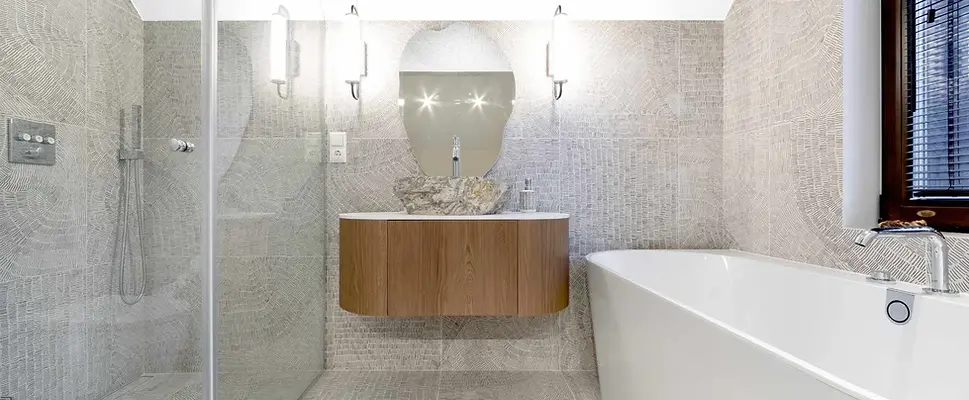
In bathrooms, it is essential to dry surfaces and ensure adequate ventilation.
Stalvirsiai
04
WOOD AND VENEER
Choose the appropriate care method for natural surfaces according to their finish: lacquer, oil, or wax.
Natural wood and veneer
-
Clean with a soft, well-wrung cloth in the direction of the wood grain, then dry immediately. Do not use excessive amounts of water.
-
Apply oil or wax only if specified for the particular finish. Do not apply oil to lacquered surfaces.
-
Maintain stable indoor conditions and protect surfaces from direct sunlight and heat sources. Natural variations in grain and shade are to be expected; colour may change over time.
-
Do not use drain cleaners, oven cleaners, strong descalers, chlorine bleach, acetone, or paint thinners on wood or veneer. Avoid prolonged soaking and steam cleaning.
-
Do not use polishing pastes on wood with a matt lacquer finish. Refresh oiled surfaces only with a product intended for that finish, after checking the preparation and drying requirements.
Lukštas
05
GLASS AND METAL
Clean these components carefully to prevent the cleaning product from coming into contact with adjacent sensitive surfaces.
Glass, mirrors and metal surfaces
-
For glass and mirrors, use a glass cleaner. Apply it to a cloth rather than spraying directly onto edges or fixing points, then dry thoroughly.
-
Protect glass from impacts and sudden temperature changes. Do not overload glass shelves.
-
Clean metal with a non-abrasive product suitable for its finish. Do not assume that stainless steel cleaners are suitable for all painted or chrome-plated components.
Stiklas
06
FURNITURE HARDWARE
Use furniture for its intended purpose and observe the load limits specified for its construction and hardware.
Shelves, drawers, and mechanisms
-
Distribute weight evenly. Do not exceed the load limits specified for the shelves, drawers, and wall-mounted cabinets in your order. There is no universal weight limit applicable to all furniture.
-
Do not lean on open doors or drawers, or hang additional weights from them. Do not allow children to climb on furniture.
-
Open and close doors and drawers gently. Do not force doors beyond the opening angle permitted by their hinges or slam doors and drawers fitted with soft-close mechanisms.
-
Remove dust from sliding door tracks using a soft brush or a vacuum cleaner with a suitable attachment.
-
Do not lubricate runners or hinges unless instructed to do so. Lubrication and adjustment must follow the instructions provided by the manufacturer of the specific hardware.
Furnitūra

Compliment-worthy furniture


DARBO LAIKAS
I - V 9 - 17 val.
VI - VII nedirbame
NUORODOS
bottom of page